
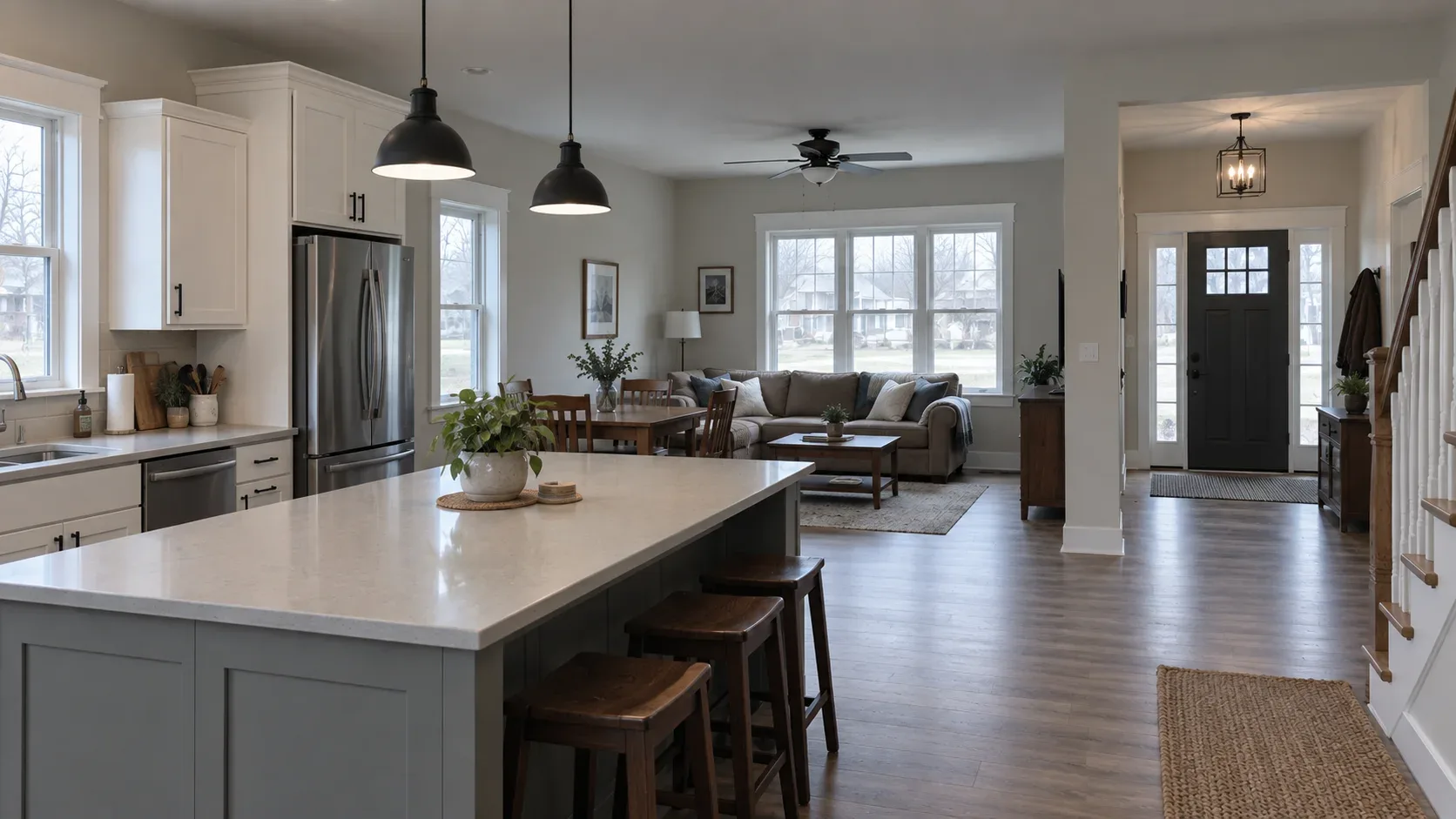
There is no useful one-size-fits-all price for a general contractor. A contractor may manage a kitchen remodel, a multi-room project, an addition or a commercial build-out, and each one has a different amount of coordination behind the final number.
The calculator below shows a planning allowance based on the level of coordination involved. It is a starting point for scope discussions, not a quote or a promise of final cost.
Local planning context
What is different about planning a project in Dayton
Dayton-area work can move between city, suburb and township jurisdictions even when properties are only a short drive apart. An address check should happen before a schedule is promised, especially when the scope changes structure, occupancy, drainage or the footprint.
Older Miami Valley homes can also make the existing condition part of the budget: uneven floors, older wiring, hidden plumbing and previous additions need to be separated from the visible finish work.
- Confirm the exact building and zoning authority
- Separate known scope from concealed-condition allowances
- Plan access, inspections and trade sequence before ordering materials
- Keep changes and approvals in the project record
What a general contractor coordinates
The general contractor connects the parts of the project that can otherwise become separate problems. That includes the written scope, trade sequence, material decisions, site access, inspections, changes and closeout.
The work behind the number
A proposal should make the coordination work visible instead of hiding it inside a vague total.
- Scope definition, allowances and exclusions
- Scheduling and communication between trade partners
- Material timing, site protection and access planning
- Documented changes, cleanup and project closeout
A fee is not the project budget
The contractor's coordination cost is one part of a larger project budget that also includes labor, materials, permits, design or engineering where needed, disposal and allowances.
What changes general contractor cost in Dayton
Two projects with the same rough budget can require very different management effort. The property, scope and project conditions matter as much as the headline number.
Number of trades and phases
A single-room remodel with a clear scope is simpler to coordinate than work that moves through several rooms, phases or connected systems.
Existing conditions and access
Older finishes, hidden plumbing or wiring, occupied rooms, limited parking and difficult material access can add planning and protection work before construction starts.
Selections and schedule pressure
Late selections, long-lead products and a fixed event date can change the sequence. A clear allowance and decision schedule helps keep the estimate useful.
How to compare general contractor proposals
Do not compare only the total at the bottom of two proposals. Compare what each contractor has included and who owns the decisions that can affect cost later.
Ask what is included
Look for demolition, protection, rough-ins, finish work, disposal, permits or inspection responsibilities, cleanup and closeout documents.
Ask how changes are handled
A useful agreement explains how an owner-requested change or concealed condition is described, priced and approved before changed work proceeds.